
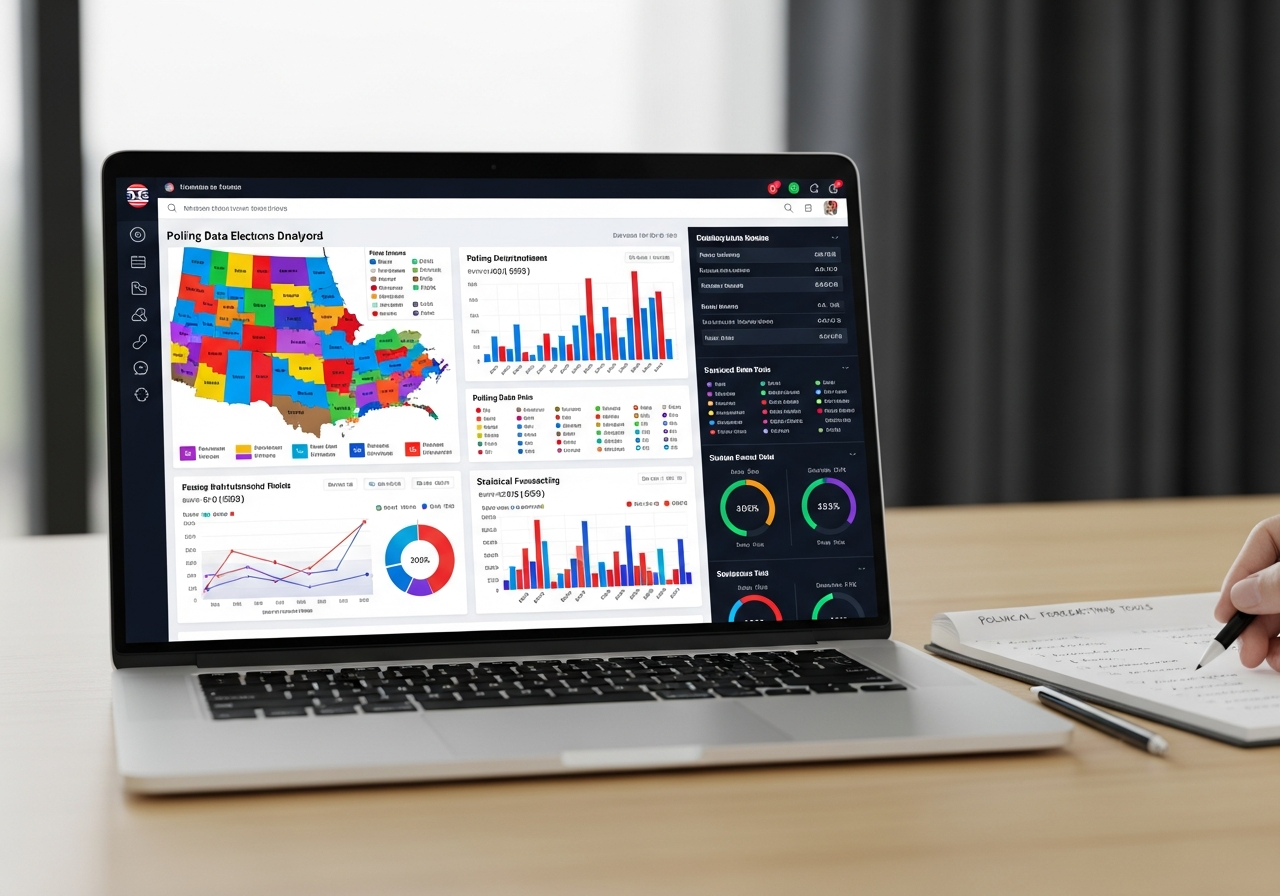
Political betting with real money on elections and policy outcomes is currently illegal for Indian residents under national gambling and online money gaming rules. This article is provided for information and harm-reduction purposes only—not as encouragement to engage in illegal activity. Understanding what the law says, how these markets function, and what risks are involved can help you make safer decisions and avoid serious legal and financial consequences.
Interest in betting on political events has grown significantly in India, driven by the rise of global prediction markets like Polymarket and Kalshi, which offer real-time odds on elections, policy decisions, and geopolitical outcomes. Many Indian users have reportedly attempted to access these platforms via VPNs and cryptocurrency despite local blocks and legal prohibitions. However, circumventing these barriers exposes users to criminal investigation, frozen bank accounts, asset seizure, and tax penalties under PMLA, FEMA, and income-tax laws.
This guide walks you through: (1) what Indian law currently says about political betting; (2) how prediction markets and election betting actually work; (3) how Indians are practically trying to access offshore platforms and the legal and financial risks they face; (4) safer, legal-compliant alternatives like non-monetary prediction games and data-driven political analysis; and (5) responsible gambling principles tailored to the high-emotion context of political events.
Is Political Betting From India Legal Right Now?
Money-denominated prediction markets and online betting are treated as illegal gambling under Indian law. The Public Gambling Act (1867) has long prohibited betting and wagering on games of chance, and recent government moves to ban online money gaming have extended this framework to digital platforms. Election betting—whether via traditional satta bazar operators, offshore prediction exchanges, or peer-to-peer arrangements—falls squarely into this prohibition. Violating these rules can lead to investigation, criminal charges, and civil penalties.
| Aspect | Status for Indian Residents | Key Risks / Laws Involved | Practical Takeaway |
|---|---|---|---|
| Betting on Indian elections with real money | Clearly illegal | Public Gambling Act, IT Act, potential PMLA/FEMA investigation | Do not engage; high enforcement risk |
| Betting on foreign elections via offshore platforms | Illegal under Indian law; blocking enforced | FEMA violations, payment gateway blocking, PMLA scrutiny if large flows detected | Illegal even if technically accessible via VPN |
| Satta bazar-style election betting (informal networks) | Illegal and unregulated | Criminal gambling charges, association with illegal networks, no consumer protection | Extremely high risk; no recourse if non-payment occurs |
| Crypto-based prediction markets (Polymarket, etc.) | Illegal for Indian residents despite offshore jurisdiction | FEMA, PMLA, potential IT blocking, crypto exchange KYC issues, tracing of funds | Illegal; crypto does not provide legal cover for gambling |
| Non-monetary prediction tournaments (play-money, points-based) | Generally permissible if no real money involved | Minimal if terms prohibit Indian users; check T&Cs | Safer alternative; verify platform’s country restrictions |
| Fantasy-style election games with prizes (vouchers, gifts only) | Grey zone; depends on structure and payout | Potential advertising/consumer protection issues; safer if no cash payout | Verify with platform and understand prize structure |
How Indian Law Treats Election & Political Betting
India’s gambling law has historically centered on the Public Gambling Act (1867), which prohibits running gambling establishments and placing bets on games of chance. Betting on elections is considered a form of satta (unregulated wagering) and falls under this prohibition. Traditional satta bazaar operators who accept election bets operate in criminal networks with zero transparency or regulatory oversight.
In recent years, the Government of India has intensified efforts to ban online money gaming and online betting more broadly. State-level initiatives and national conversations about regulating digital gambling have specifically called out prediction markets as forms of unregulated gambling when real money is involved. This means platforms like Polymarket and Kalshi are blocked for Indian IP addresses, and payment gateways (banks, crypto exchanges) are instructed to refuse transactions tagged as gambling or prediction-market activity.
Enforcement is not limited to blocking platforms. When large or suspicious cross-border flows or cryptocurrency transactions are detected, authorities may investigate under the Prevention of Money Laundering Act (PMLA), the Foreign Exchange Management Act (FEMA), and income-tax law. Penalties can include asset seizure, bank account freezes, criminal prosecution, and years of regulatory scrutiny.
Why This Matters Before You Place Any Political Bet
The stakes are personal and severe. If you place bets via an offshore platform, your bank account can be frozen if the transaction is flagged as gambling-related. Cryptocurrency wallets can be de-listed by exchanges if they are linked to a PMLA investigation. Winnings, even if you manage to repatriate them, become subject to Indian income tax—but attempting to hide or under-declare them compounds legal risk rather than reducing it. If a platform is suddenly banned or shuts down, you may have no recourse to recover funds.
Beyond enforcement, there are operational risks. Offshore platforms can suddenly change their terms of service, freeze accounts without explanation, or collapse due to regulatory pressure (as happened with some crypto prediction markets in 2023–2024). A VPN connection is not a legal shield; it merely hides your location from the platform’s servers, not from Indian banking systems or tax authorities investigating your finances.
The rest of this guide describes these mechanisms in detail so you understand what is happening if you or someone you know attempts to bet on political events from India. The goal is harm-reduction education, not encouragement. The safest choice remains not to bet at all.
How Political Betting & Prediction Markets Work
Prediction markets are platforms where users buy and sell contracts tied to real-world events—elections, policy decisions, geopolitical outcomes, economic indicators. The price of each contract (usually quoted on a 0–100 scale) reflects the market’s collective assessment of the probability that the event will occur. If a contract on “Trump wins 2024 US election” is priced at 60, that means the market is pricing in approximately a 60% probability of that outcome.
Unlike traditional sportsbooks where you place a fixed bet at a set price and wait for settlement, prediction markets function more like stock exchanges. You can enter a trade at any time, adjust your position as new information arrives, and exit early to lock in profit or cut losses. This trading-like structure has made prediction markets popular among people who view political outcomes through an analytical or investment lens.
- Market creation and rules – A platform lists an event (e.g., “Will India’s GDP growth exceed 6% in fiscal year 2024–25?”) with precise outcome definitions and a resolution date. Users review the rules to understand what counts as settlement criteria.
- Contract pricing and trading – Each contract is priced between 0 and 100, representing implied probability in percentage terms. You can buy shares at the current ask price or place limit orders. The order book continuously updates as other traders adjust their positions.
- Price movement as information arrives – Breaking news, poll releases, economic data, or other events cause traders to reassess probability. If a major policy announcement supports a particular outcome, the contract price for that outcome may spike. Traders who anticipated the move profit; those on the wrong side lose.
- Early exit (optional) – Unlike a traditional bet, you can sell your position before the resolution date. If you bought at 40 and the price rises to 70, you can cash out and pocket the profit without waiting for the actual event.
- Settlement and payout – On the resolution date, the platform confirms the outcome. Contracts on the winning outcome settle at 100; losing contracts settle at 0. Your profit or loss is locked in automatically.
Example: Trading an Election Contract Instead of a Simple Bet
Imagine a US presidential election contract is listed on a prediction market at a price of 60 (60% implied probability). You believe the probability is actually higher—perhaps 70%—so you buy 10 shares at 60 cents each, spending $6.
A few weeks later, new polling data shows the candidate gaining ground. Market sentiment shifts, and the contract rises to 80. You decide to sell your 10 shares at 80 cents each, netting $8. Your profit is $2 (before any fees).
Alternatively, if the contract had dropped to 30 cents (if new negative information emerged), you could sell to cut your loss at $3 total, rather than holding until election day and losing the full $6.
The key difference from a fixed-odds bookmaker bet is optionality. A bookmaker’s bet is typically all-or-nothing at settlement; a prediction market contract can be exited at any intermediate price, allowing traders to treat it more like a financial instrument. However, Indian regulators do not make a legal distinction—both are considered forms of gambling and are prohibited for residents.
Ways Indians Are Currently Accessing Political Betting Markets
Despite legal prohibition and platform blocking, some Indian residents have found ways to access offshore prediction markets. Understanding these methods—and the risks they entail—is crucial to informed decision-making.
| Method | Typical Use Case | Tech/Payment Needed | Key Legal & Practical Risks |
|---|---|---|---|
| VPN + offshore prediction market (Polymarket, etc.) | Trading on global elections, high liquidity | VPN app, offshore crypto wallet or bank account, stablecoin or crypto | FEMA violation, PMLA investigation if large flows, platform account closure if detected, payment gateway blocking |
| Traditional satta bazar on elections (word-of-mouth, cash) | Local election betting, immediate settlement | Phone/in-person contact, cash or informal credit | Criminal gambling charges, association with illegal networks, non-payment of winnings, intimidation or violence, zero consumer protection |
| Social media tip groups (Telegram, WhatsApp forwarding odds) | Receiving and sharing odds on elections without placing bets directly | Smartphone, messaging apps | Potential harassment by law enforcement, association with illegal betting groups, indirect participation in unregulated gambling |
| P2P betting via UPI or cash within friend networks | Small informal bets with friends on elections | UPI, bank transfer, or cash | Evidence of gambling on payment gateways, potential freezing of bank account, involvement in illegal wagering despite informal nature |
| Foreign-registered accounts (relatives/friends abroad) | Circumventing Indian restrictions by routing through overseas account holder | Relative or friend abroad with banking/crypto access, transfer of money via informal channels or crypto | FEMA violations, gift tax implications, money laundering suspicion if large amounts, potential harm to relative’s account if used for illegal activity |
VPN, Crypto & Offshore Platforms: Why Indian Users Still Try
The appeal is straightforward: offshore prediction markets offer 24/7 liquidity on global political events, transparent order books, and the ability to profit from political knowledge without local restrictions. Markets like Polymarket attract hundreds of millions of dollars in trading volume during major elections, allowing traders to take large positions and exit quickly.
For some Indian users, the allure is intensified by curiosity about US elections, Brexit, European politics, and other geopolitical outcomes. The intellectual exercise of forecasting is genuine; the financial incentive is real. Some users treat political market trading as a quasi-professional activity, spending hours analyzing polls and macroeconomic data.
However, using a VPN and cryptocurrency does not change the legal status. An Indian resident remains subject to Indian law regardless of which servers or payment systems they use. VPNs mask your location from the platform but not from banking regulators or intelligence agencies investigating suspicious cross-border flows. Cryptocurrency transactions are not anonymous; all on-ramp and off-ramp points (exchanges, p2p platforms) require KYC and are monitored for gambling-related activity. If you attempt to move large sums in and out of offshore wallets, payment gateways and exchanges will flag the transactions.
Additionally, offshore platforms are not insured by Indian deposit-protection schemes. If a platform is hacked, goes insolvent, or faces regulatory action in its home jurisdiction, your funds may be lost with no recourse.
Satta Bazar & Informal Election Betting Networks
The traditional Indian satta bazaar operates on trust networks, word-of-mouth odds, and cash settlements. During major elections, satta operators accept large bets on outcomes and adjust odds based on demand. There is no transparency, no written contract, no dispute resolution mechanism, and no consumer protection.
This ecosystem is rife with problems. Satta networks are often controlled by criminal organizations that use betting as a front for money laundering. Bettors have been threatened or harmed when trying to collect winnings. Operators have simply disappeared with funds. No one can force payment or hold anyone accountable because the entire operation is illegal.
Participating in satta betting exposes you to criminal networks, potential physical intimidation, and zero legal recourse if cheated. The lack of regulation is not a feature; it is an enormous risk factor.
Step‑by‑Step Risk Checks Before You Even Consider Betting
If you are seriously considering betting on political events from India, this checklist is designed to show you the financial and legal hazards you would face. The hope is that working through these steps will convince you not to take the risk.
- Legal assessment and professional advice – Before risking any money, consult a lawyer qualified in Indian gambling, FEMA, and PMLA law. Do not rely on online forums or friends’ anecdotes. A professional can assess your specific situation and explain the realistic criminal and civil exposure you face.
- Banking and tax implications – Understand that any offshore transfer, foreign exchange transaction, or crypto conversion is likely to be flagged by your bank or payment processor. Consult a tax professional about how winnings would be treated for income-tax and TDS purposes, and whether attempting to hide or under-declare them would constitute tax evasion.
- Platform risk assessment – If considering a specific platform, research its regulatory status, jurisdiction, track record, and whether it has faced legal action. Platforms that aggressively market to India despite the ban are a red flag. Check whether the platform has insurance, a dispute-resolution process, and clarity on asset custody.
- Technical and custody risk – Understand the risks of using a VPN (blocks can change, platforms detect VPNs and may close accounts), managing cryptocurrency wallets (loss of private keys, exchange hacks, de-listing due to PMLA), and relying on third-party payment processors (they can freeze or seize funds at any time).
- Personal financial limits and mental health – Set a strict monetary limit on how much you are willing to lose without it affecting your finances or wellbeing. Be honest about whether you can afford to lose that money. Assess whether you are emotionally attached to political outcomes in a way that might cloud your judgment.
- Exit strategy – Develop a realistic plan for how you would withdraw winnings, what you would do if the platform is suddenly blocked in India, and how you would liquidate cryptocurrency in an emergency. If you cannot answer these questions confidently, do not place the bet.
Red Flags That Should Make You Walk Away Immediately
Stop and walk away if any of the following are true:
Aggressive targeting of Indian users. If a platform is explicitly marketing to Indians or running ads in Indian languages despite the local ban, it is operating in legal grey territory and may shut down suddenly or be targeted by enforcement.
Bonuses with unrealistic conditions. If a platform offers large welcome bonuses but requires you to trade a multiple of the bonus amount before withdrawing (high turnover requirements), you are being set up to lose more money. Legitimate platforms do not do this.
No clear company information or regulation. If you cannot find a company address, list of executives, or clear regulatory status, the platform may be a scam or may disappear without warning.
Guaranteed profit claims. Anyone claiming they can guarantee you profits on elections or telling you they have “inside information” is lying. Walk away immediately.
Requests to route funds through obscure wallets or third-party bank accounts. If a platform or a tip group asks you to send money to a middleman’s account or wallet, you have no protection and the funds may be stolen.
Once money leaves regulated Indian banking channels, recovery is nearly impossible. If you are scammed or the platform collapses, there is no regulator, no insurance, and no legal mechanism to force repayment.
Analysing Political Events Like a Trader (Without Breaking the Law)
If you are interested in political forecasting and want to develop analytical skills without illegal gambling, there are legitimate approaches. Professional prediction market traders rely on careful analysis of polling data, historical trends, macroeconomic indicators, and policy developments. You can learn and practice these same skills non-monetarily.
| Analysis Angle | Data Sources | How Prediction Markets Use It | How You Can Use It Legally |
|---|---|---|---|
| Polling data and voter sentiment | Election Commission, reputable polling firms (e.g., CSDS, Lok Sabha polls), FiveThirtyEight, Wikipedia polling aggregators | Market prices adjust as new polls are released; traders update probability estimates based on sample size and pollster track record | Build your own polling tracker, maintain a journal of poll releases and how you think they affect outcome probabilities; compare your estimates to published aggregators |
| Historical election trends and demographic shifts | Census data, past election results (election.gov.in), demographic research by think tanks | Markets price in constituency-level patterns, swing areas, demographic turnout changes | Analyze historical data to identify which demographic shifts or regional swings have driven election outcomes; project forward to current election |
| Fundraising, campaign spending, and ground presence | Campaign finance disclosures, media reports on rallies and ground organization, news coverage | Markets incorporate candidate resources and visibility as predictors of momentum and voter outreach | Monitor fundraising announcements and campaign activity; assess how well-funded or organized campaigns are relative to historical norms |
| Macroeconomic indicators and policy sentiment | RBI data, inflation/unemployment figures, GDP growth, interest rate decisions, government policy announcements | Markets price in economic conditions affecting incumbent popularity and voter mood; policy announcements shift expectations for sector-specific outcomes | Track economic indicators and policy announcements; discuss how they might affect voter sentiment; compare your forecasts to actual election outcomes |
| News cycle, geopolitics, and scandal | Major news outlets, international coverage, breaking developments during campaign | Markets react sharply to scandals, gaffes, security incidents, or international events that change voter sentiment | Follow news carefully and maintain a log of major events; note whether your prior probability estimate was correct and why |
| Betting market prices themselves (as sentiment signal only) | Public quotes from legal, global prediction markets (Polymarket, Kalshi, etc.) | Traders reference global market prices as one input; prices aggregate information from thousands of other traders | View published odds as one input into your own forecast; do not treat them as truth, but as a sentiment signal to evaluate against your analysis |
Building a Personal Political Forecasting Framework
Start a prediction journal where you write down specific probability estimates for political outcomes before they are resolved. For example: “I estimate there is a 65% chance that Candidate A will win the 2024 state election, based on polling showing a 3-point lead, strong ground organization in swing constituencies, and a favorable economic environment.”
After the event, record the actual outcome and compare it to your estimate. Over time, you will develop a sense of whether your estimates tend to be overconfident, underconfident, or well-calibrated. This kind of disciplined forecasting—tracking your accuracy (known as the Brier score or calibration) over many predictions—is how professional forecasters improve.
You do not need to place bets to engage in this exercise. Non-monetary prediction is a real skill, and many academic and professional forecasting communities use it. The enjoyment of forecasting and the satisfaction of being right come without financial risk.
Using Global Prediction Markets as a Sentiment Signal Only
You can legally observe the publicly quoted prices on offshore prediction markets for informational purposes. If Polymarket is pricing a US election outcome at 65%, that is a data point you can consider alongside polls, your own analysis, and media commentary. Viewing prices is not the same as trading.
However, do not attempt to place trades or open accounts on platforms that block Indian users. The line between “viewing for information” and “accessing for trading” is clear in law and on platforms’ terms of service. Circumventing blocks to trade is illegal for Indian residents.
Safer & More Legal‑Friendly Alternatives to Political Betting
If you are drawn to political forecasting or want to test your predictive skills, there are legal alternatives that provide engagement and intellectual challenge without illegal gambling or financial risk.
- Non-monetary prediction contests and tournaments – Platforms like Metaculus, Manifold Markets (play-money version), and various university-hosted forecasting competitions allow you to make predictions on real-world events and compete for reputation or points rather than cash. Check the platform’s terms of service to confirm Indian users are permitted.
- Fantasy election games with voucher or gift prizes – Some platforms offer election-themed prediction games where you earn points or badges rather than cash payouts. Verify that prizes are non-monetary and that the platform permits Indian residents.
- Academic and community forecasting projects – Universities and nonprofits sometimes host prediction tournaments on political and policy questions. Participation is free and recognition-based; you develop forecasting skill while contributing to research.
- Political data journalism and content creation – Write articles, create videos, or launch a blog analyzing elections, polls, and political trends. Monetize through Patreon, sponsorship, or media outlets; the revenue comes from your analysis, not from gambling.
- Politically informed long-term investing – Build a long-term investment portfolio (stocks, ETFs) based on policy expectations (e.g., renewable energy stocks if you believe clean-energy policy will be prioritized). This is different from betting on election outcomes; it is subject to normal investment regulation and you retain the underlying assets.
- Volunteer work in elections and civic engagement – Participate in poll monitoring, voter education, or election observation. Your insights into politics come from direct participation rather than financial speculation.
Political‑Themed Investing vs Gambling on Election Outcomes
There is a meaningful distinction between using policy expectations to inform long-term investment decisions and placing short-term binary bets on election results. If you believe a political party’s policies will benefit renewable energy, you might buy solar or wind energy ETFs and hold them for years. This is legal, regulated investing. You own an underlying asset and are exposed to both policy and market risk.
Election betting, by contrast, is purely a bet on a binary outcome; you do not own anything and your only payoff is the bet settlement. In prediction markets, you can exit early, but you are still speculating on event outcomes rather than owning productive assets.
If you pursue political-themed investing, apply standard financial discipline: diversify across sectors, limit position sizes, understand the risks, and avoid overweighting your portfolio to any single policy bet. Remember that markets frequently misprice political outcomes; do not assume your forecast is correct.
Banking, Tax and Compliance Issues for Indian Residents
Any cross-border financial flow related to gambling attracts regulatory scrutiny in India. Understanding the specific laws and risks is essential to grasping why offshore political betting is not just illegal, but dangerous.
| Issue | How It Arises in Political Betting | Relevant Indian Rules / Concerns | What This Means for You |
|---|---|---|---|
| Foreign remittances for betting | Sending money abroad to fund a prediction market account or receiving winnings back to India | FEMA (Foreign Exchange Management Act) prohibits outbound remittances for gambling; RBI and banks are instructed to block such transfers | Your bank will likely reject or flag a transfer explicitly labeled as betting; if you mislabel it, detection during audit can trigger PMLA investigation |
| Using relatives’ or friends’ accounts abroad | Routing betting funds through a family member’s foreign bank account or cryptocurrency wallet | FEMA rules; also potential gift tax implications and PMLA scrutiny if the account holder is unknowingly participating in illegal activity | Your relative’s account can be frozen or investigated; their banking relationship can be damaged; large transfers may trigger PMLA reporting |
| Cryptocurrency on-ramp and off-ramp | Converting Indian rupees to stablecoin or crypto to fund betting, and converting winnings back to fiat | FEMA applies to crypto; crypto exchanges in India are required to report suspicious activity; exchanges can de-list wallets flagged for gambling | Crypto exchanges have increasingly strict KYC; many have closed accounts of users with betting-related transactions; your identity is not hidden in crypto |
| Tax treatment of winnings | If you somehow declare betting winnings, they would be taxable as income under Indian income-tax law | Income Tax Act; potential TDS (tax deducted at source) on large transfers; penalties for non-declaration | Even if you win, you owe tax on the winnings; attempting to hide them is tax evasion and compounds your legal exposure |
| Income-tax audit and unexplained wealth | Large or unusual cross-border flows or cryptocurrency holdings can trigger income-tax department scrutiny | IT Act Section 69 (unexplained wealth); PMLA Act (if flows are deemed to be proceeds of illegal activity); potential assessment and penalties | If your account shows large unexplained transfers to crypto or foreign wallets, the tax officer can assess income and levy penalties; you must prove the source |
| Bank account freezing and payment blocking | Banks detect gambling-related transactions and freeze accounts or report to authorities | Banking Regulation Act; RBI’s instructions to banks on blocking gambling payments; PMLA reporting thresholds | Your bank account can be frozen without advance notice; even if your account was not for active betting, association with gambling flows can trigger action |
| PMLA (Prevention of Money Laundering Act) investigation | Large or repeated flows to offshore gambling platforms may be deemed suspicious and reported to the Financial Intelligence Unit (FIU) | PMLA (2002); penalties include civil penalties and potential criminal prosecution if gambling proceeds are deemed laundered | If referred to FIU, you may face investigation, asset seizure, and criminal charges; prosecution can take years and result in imprisonment |
Why ‘Small Amounts’ Are Not Necessarily Safe
Many people assume that small bets—a few hundred rupees or dollars—will fly under the radar. This is a dangerous misconception. Banks and crypto exchanges use automated transaction-monitoring systems that flag patterns, not just absolute amounts. A series of small transfers to offshore gambling platforms can actually be more suspicious than a single large transfer because it suggests deliberate attempt to evade detection.
Additionally, there is a psychological risk: small bets are easy to start, but they often escalate. The pattern is well-documented in problem gambling: initial modest stakes gradually increase as losses mount and the gambler chases them. What began as a “harmless small bet” can grow into significant sums over months or years. By that time, the transaction pattern is established and regulatory exposure is high.
Talking to a Professional Before You Take Any Risk
Before moving any money into offshore political betting, seriously consult a qualified legal adviser and a tax professional. These advisers should have specific experience with Indian gambling law, FEMA regulations, crypto compliance, and PMLA. Do not rely on online blogs, YouTube videos, or friends’ stories.
A good lawyer can help you understand your specific exposure based on your financial situation, citizenship status (NRI vs. resident), and the specific platform or method you are considering. A good tax adviser can explain how winnings would be taxed and what documentation you would need to prove a valid source. This advice is worth paying for because getting it wrong can cost you far more.
Responsible Gambling & Knowing When to Stop
Even though this article strongly discourages illegal betting, some readers may still take risks. If you do, please apply responsible gambling principles. Political betting carries unique psychological hazards because elections and policy outcomes are emotionally charged; it is easy for forecasting to become identity-driven rather than rational.
- Set strict monetary and time limits. Decide in advance the maximum amount you will wager in a day, week, or month, and stick to it. Set a daily or weekly limit on how much time you will spend following markets.
- Never bet on outcomes you are emotionally invested in. If you have a strong political preference or identity, avoid betting on elections in that context. Your judgment is compromised and your losses will be more painful.
- Separate political identity from financial risk. Do not see betting on “your” candidate or party as a way to express loyalty or have financial skin in the game. That mindset leads to irrational decisions and chasing losses.
- Do not bet when angry, intoxicated, or distressed. Emotional states impair judgment. If you have had an argument, received bad news, or are drinking, do not place trades.
- Be willing to self-exclude. If you find yourself betting more than planned or thinking about politics and markets obsessively, use the platform’s self-exclusion feature or delete your account. Many platforms offer this.
- Track your record honestly. Keep a log of your trades and outcomes. If you are consistently losing, stop. Do not assume the next trade will recover losses.
- Never chase losses. If you lose money, the urge to “win it back” with a larger bet is powerful and almost always leads to bigger losses. Accept the loss and walk away.
Getting Help if Political Betting Starts to Harm You
If you find yourself unable to stop betting, hiding betting activity from family, neglecting work or relationships to follow markets, or feeling intense anxiety around election dates, you have a problem and should seek help.
Speak with a mental-health professional or counselor experienced in gambling addiction. In India, resources include the National Council for Addiction and Mental Health (NACAM), online therapy platforms, and confidential counseling services. Many workplaces offer employee assistance programs (EAP) that include addiction support.
Gambling harm is not about absolute amounts wagered; it is about impact on your life. Even small bets can be harmful if they are compulsive, hidden, or associated with stress and relationship damage. You deserve help, and seeking it is a sign of strength.
—
Final Word: Political betting from India is illegal, financially risky, and psychologically hazardous. The promise of profiting from political knowledge is real, but so are the risks of criminal investigation, frozen accounts, tax penalties, and loss of funds. The alternatives—non-monetary forecasting, data-driven analysis, informed investing, and civic engagement—offer intellectual engagement without legal peril. Choose the safer path.